Do You Know How Many "Thinking" Verbs Claude Code Is Secretly Spitting At You?
You open your terminal. You type claude. You ask it to fix that one horrifying asynchronous loop that has been haunting your codebase for three weeks.
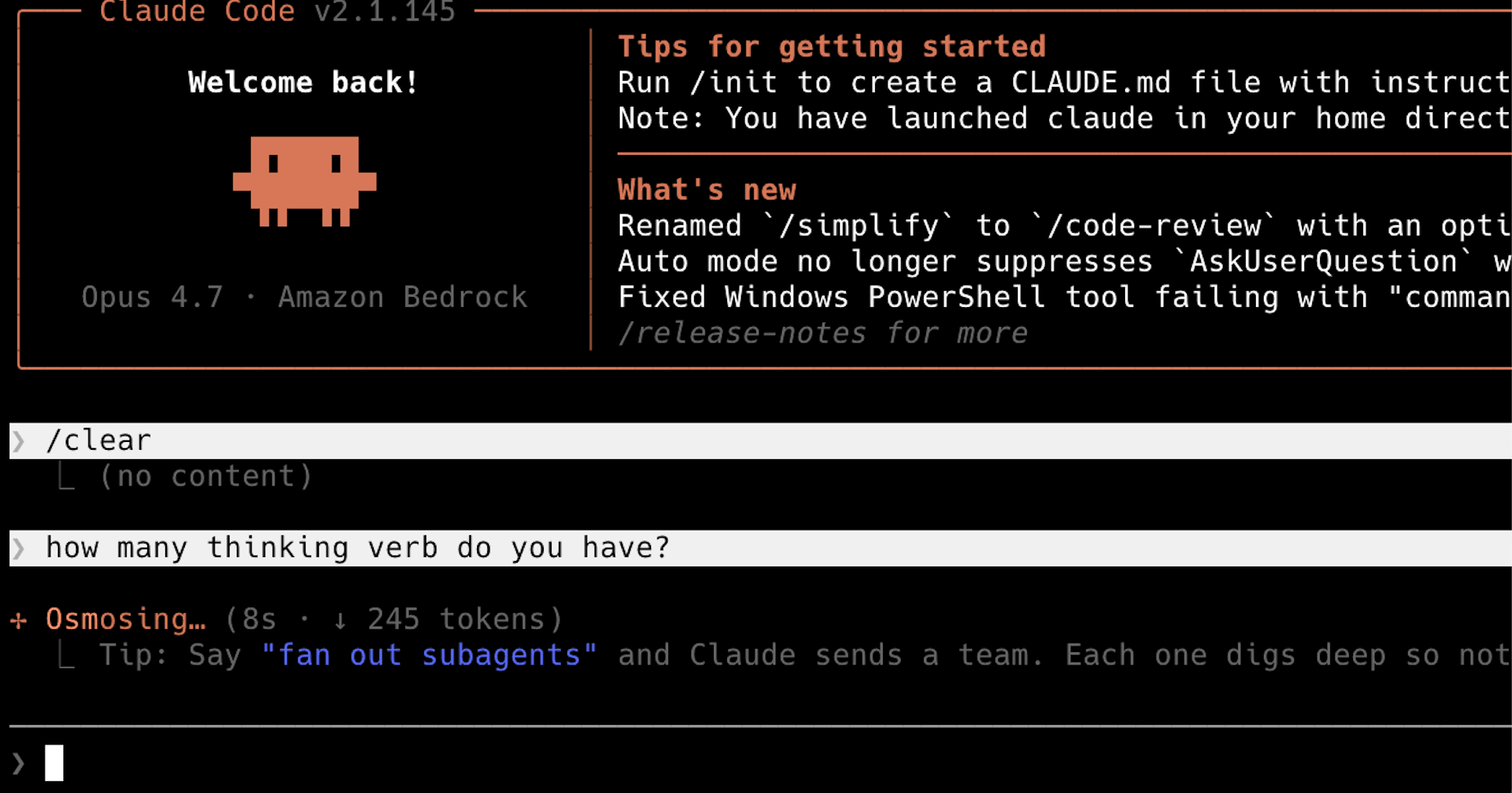
You hit Enter. And then, it happens. A tiny, blinking word appears at the bottom of your screen, changing every few milliseconds:
If you are like most engineers, you probably thought Anthropic just threw a standard 5-word array into a standard setInterval loader spinner. Something lazy like ['Thinking', 'Processing', 'Working'].
But if you actually crack open the compiled binary sitting in your local ~/.local/share/claude/ directory and extract the V8 engine’s hardcoded strings, you will discover an absolute psychological thriller. Claude Code isn't just "thinking." It has a vocabulary of more than 600 unique verbs that it flashes across your terminal while it figures out how to fix your buggy JavaScript.
1The Linguistic Flex: From Elite to Ridiculous
Anthropic’s engineers didn't just build a terminal assistant; they built a terminal assistant with an identity crisis and a massive vocabulary flex.
When you click enter, Claude starts cycling through legitimate, highly technical computer science jargon:
But the moment the prompt gets a little too complex, you can watch it descend into what looks like a minor existential panic attack. It stops behaving like a multi-billion-dollar AI framework and starts acting like a Victorian philosopher who had too much cold-brew:
2The Terminal Inside Jokes
If you let the spinner run long enough, you realize the dev team at Anthropic was clearly having a blast while writing the CLI wrapper. Buried deep in the binary's text stream are verbs that describe exactly what we are all doing when our code doesn't work:
Yes, while you are sweating bullets hoping your unit tests pass, your local AI client is actively Shenaniganing in the background.
3Wait... Why is it Cooking?
Perhaps the strangest discovery in the 600+ verb list is Claude’s bizarre obsession with culinary arts. If the AI ever gets tired of coding, it is fully prepared to open a Michelin-star restaurant. Next time you ask it to refactor a component, look closely and see if it's secretly doing prep work:
Honestly, given the state of some legacy codebases, "marinating" and "simmering" are probably the exact correct terms for reading through 5,000 lines of undocumented spaghetti code.
The Moral of the Story
The next time you prompt Claude Code and wait those few brief seconds for a response, give some respect to the machine. It’s not just calling an API endpoint. It is Hullaballooing, Befuddling, Photosynthesizing, and Razzmatazzing its way into your file system.
And if you ever get tired of its 600-word vocabulary? You can actually override the whole thing in your global ~/.claude/settings.json file by adding your own customized "spinnerVerbs".
Though honestly, matching Anthropic's level of chaos is going to be a tough refactor.